
What actually happens when you build a house
Most people have never seen a house get built from the dirt up, which is exactly what makes the first one expensive. Here is the real sequence, in order, and where we come in at each stage.
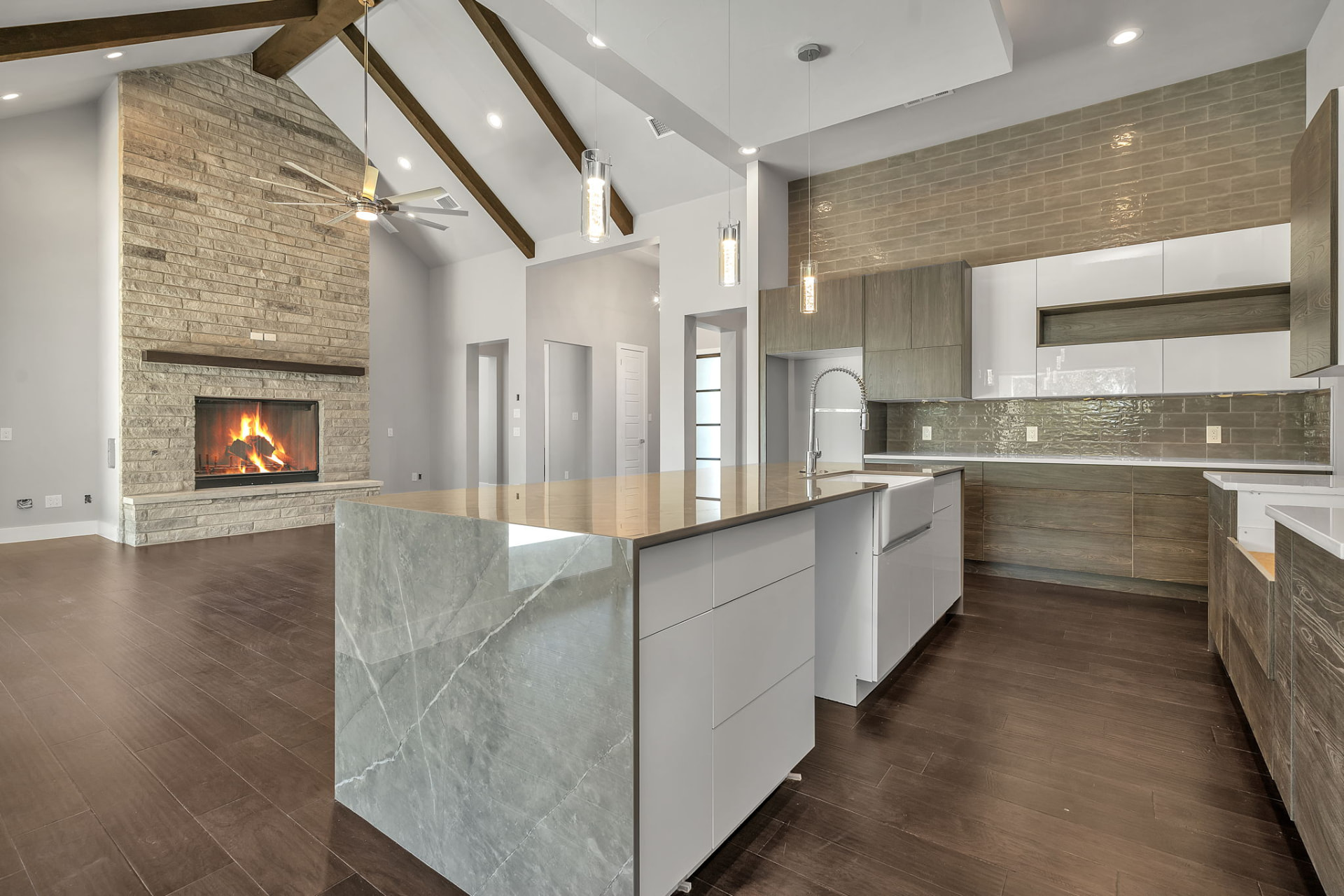
Plans and budget
What happens. You settle on a design, square footage, and a realistic number. This is the stage where the most money is won or lost, and almost nobody treats it that way.
Where we come in. We help you price the plan by cost code before you commit to it, so you find out in week one rather than month seven that the house you drew costs three hundred thousand more than you have.
Financing and permits
What happens. Your lender needs plans, a detailed budget, and a schedule before they will close a construction loan. If you are hiring a builder they will want the contract too. Your city and your HOA need their own separate packages.
Where we come in. We help you assemble what each one is asking for, in the format they want it, so you are not learning their requirements through rejection letters.
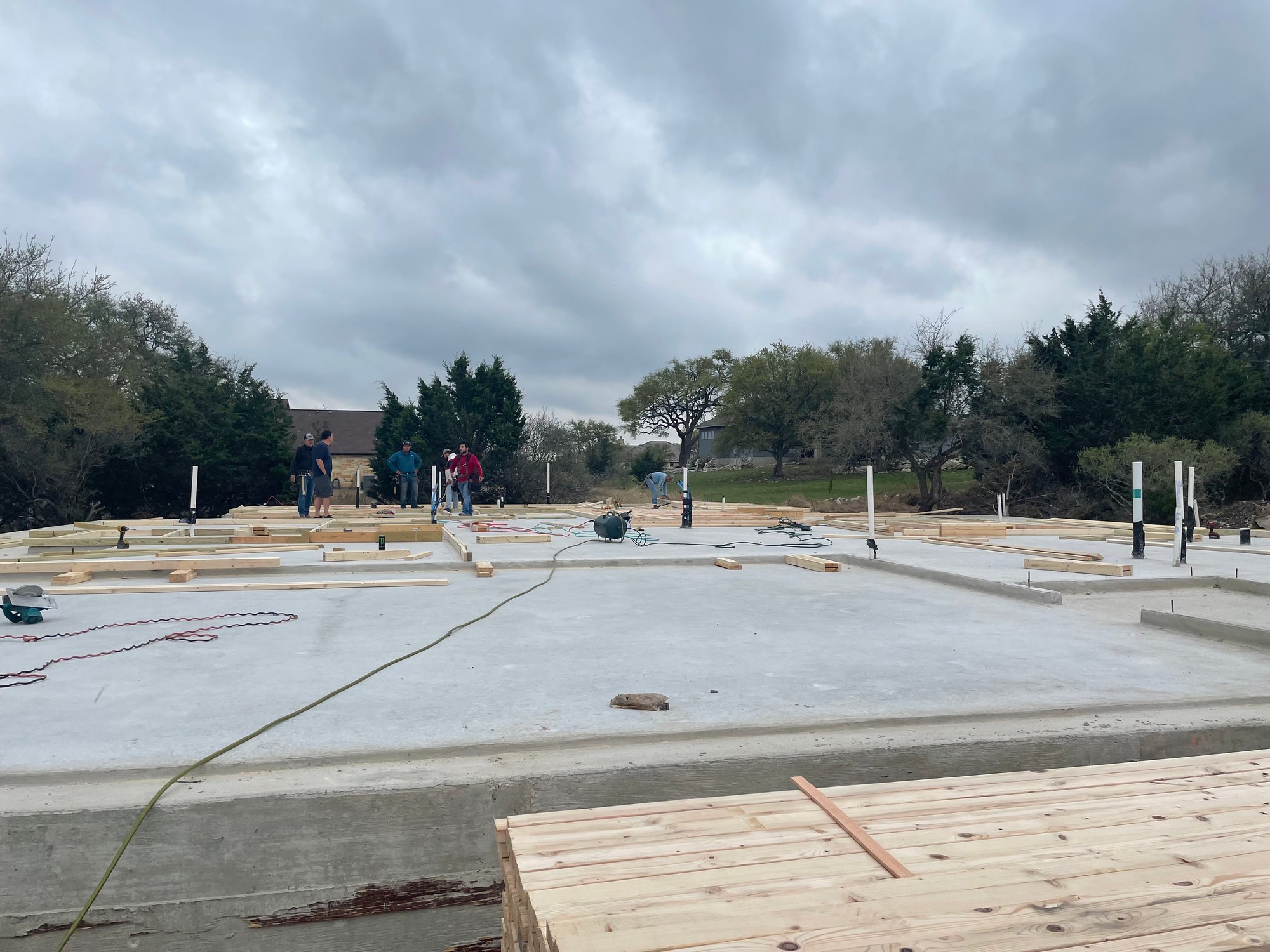
Site work and foundation
What happens. Clearing, pad prep, forms, plumbing rough-in under the slab, rebar, engineer inspection, then the pour.
Where we come in. We help you identify which subs you need and in what order, and we make sure you know what has to be signed off before the concrete truck gets scheduled. Foundation mistakes are the most expensive kind, because everything else sits on top of them.
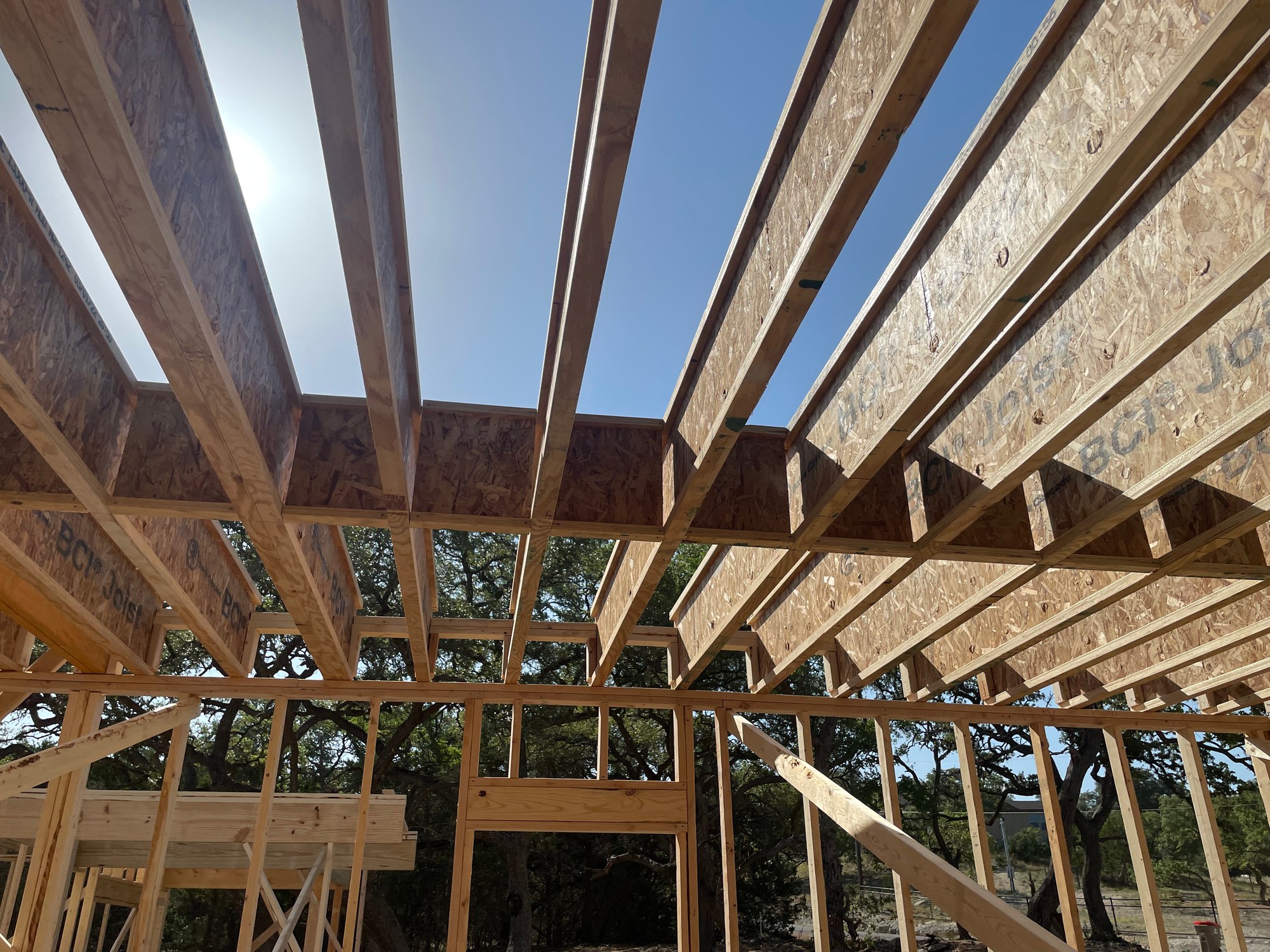
Framing
What happens. The house goes vertical. Trusses, sheathing, windows, roof dry-in. This is the fastest visible progress you will see and the easiest stage to overpay for.
Where we come in. We help you check the framing against the plans before it gets covered up, and we show you how to read a draw request against what is actually standing.
Rough-ins and inspections
What happens. Electrical, plumbing, and HVAC go into the walls. Then inspections, which have to pass before anything gets closed up.
Where we come in. We help you sequence the trades so they are not tripping over each other, and we flag anything heading toward getting covered up before it has been inspected.
Finishes
What happens. Drywall, paint, cabinets, flooring, tile, fixtures, countertops. Hundreds of decisions, most of which have a deadline you did not know about.
Where we come in. This is where allowances quietly become overages. We help you track selections against budget as you make them, so the number at the end is not a surprise.
Punch list and closeout
What happens. Final inspections, certificate of occupancy, final draws, lien releases, warranty documentation.
Where we come in. We help you build the punch list and show you how to hold each trade to it before final payment goes out. We also walk you through the lien releases and warranty paperwork to collect, which most owners never think about until they need it.
How long this takes
Two to four months of planning before you break ground, then seven to twelve months of construction. That is the range we ran as builders, and the low end assumes crews who already know each other and a set of plans that does not change halfway through. Your first build will likely land toward the upper end. Weather, inspection backlogs, and long-lead items like windows and cabinets move the number more than anything else. Anyone who promises you a date without asking what you have selected is guessing.
Start at stage one
The cheapest time to catch a problem is before the money is spent. Bring us your plans, your budget, or just an idea, and we will tell you where you actually stand.
Schedule a consultation